5,022,414 DATED JUNE 11, 1991
TISSUE
SEPARATOR METHOD
AIR-WAND®
|
|
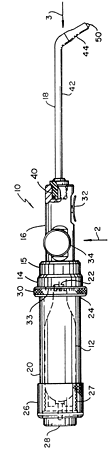
The purpose of this invention is to present the method by which atraumatic tissue dissection can be achieved. The method comprises the step of directing a fluid medium under pressure from a tissue separator including a floating tip at the tissue while floating the tip of the separator on the fluid medium. The tissue may be living tissue and in accordance with the method of the invention may be separated along natural cleavage planes. The fluid medium may be a gas or liquid and may be regulated in pressure and formed in pulses. It may be passed around and/or through the floating tip. The tissue to be separated may also be nudged by the floating tip. The fluid medium may be treated water from a municipal water supply or separate container and may be passed over a high surface to fluid interacting soap-like, replaceable cartridge made of at least one of an abrading, cleansing, polishing, and geriocidal material within the tissue separator structure prior to being directed at the tissue to be separated. The tissue separator, in addition to including a floating tip and means for performing the above method steps, may also include means for suctioning from the area of the tissue being or to be separated.
In its simplest form, the invention comprises a tissue separator approximately the size of a felt pen having a mechanical nudging tip thereon for physically nudging the tissue to be separated to provide tissue separation. In a preferred embodiment, the invention is a tissue pneumatic separator wherein a suitable fluid at a controlled pressure flows through a calibrated orifice in a floating tip in variously controlled directions to separate or cleanse tissue rapidly and accurately without damage to the tissue of surrounding membranes. The tip of the tissue pneumatic separator of the invention floats on balanced cushions of the fluid and is biased thereby outwardly of the stem to limit the nudging pressure applied by the floating tip, and thus prevent accidental injury.
In use of a sophisticated embodiment of the tissue pneumatic separator, nitrogen gas is variably controlled in pressure and may be passed to the floating tip through at least two separate controls operable either by a surgeon's thumb or his forefinger. In one modification of the tissue pneumatic separator of the invention, gas used in the separation of tissue and flowing forward through the calibrated orifice of the floating tip is controlled by the surgeon's forefinger while moisturizing fluid is passed forward around the floating tip of the tissue pneumatic separator and controlled by the physician's thumb. In another modification of the tissue pneumatic separator, the gas utilized to separate tissue and flowing forward through the calibrated orifice of the float tip is controlled by the surgeon's forefinger while excess fluids in the area of the tissue being separated may be withdrawn rearward by suctioning around the floating tip of the tissue pneumatic separator under control of the surgeon's thumb.
In a preferred use of the invention, tissue is separated by nitrogen gas passing through a floating tip of the tissue pneumatic separator, which tip may also be used to nudge the tissue being separated under a controlled and balanced gas pressure. The gas pressure may be variable, measurable, and predictable. Other gases such as carbon dioxide and liquids such as water may be utilized in practicing the method of the invention if desired and may be preferred in specific applications.
In further modifications of the method of the invention, moisturizing fluids may be passed to the tissue being separated at the same time the tissue is being separated by gas directed thereon and/or physical nudging. Also fluid, organic material or other debris may be removed from the area of the tissue being separated in accordance with the method of the invention at the same time tissue separation is being accomplished or alternately therewith. The fluid material may also be passed through or around the floating tip of the tissue separator either alternately or simultaneously.
In a particular embodiment of the invention suitable for dental use, the fluid material is water, which is variably regulated and may be pulsed. The water may be obtained from a municipal water supply through a faucet or from a pressurized container.
Also, in the method of the invention the tissue separator structure may include a body portion and the fluid medium is passed over a high surface to fluid interacting, soap-like, replaceable cartridge. The cartridge is made of at least one of an abrading, cleansing, antiseptic, astringent, flavoring, fungicidal and bacteriocidal matter within the body portion prior to directing the water at the tissue.